


Time:2023.10.17Browse:1
Due to the fact that graphite is a non-polar material, it is difficult to intercalate with small polar organic or inorganic acids alone, so oxidants are usually required. The chemical oxidation method generally involves soaking natural flake graphite in a solution of oxidants and intercalators. Under the action of strong oxidants, graphite is oxidized, causing the neutral network of planar macromolecules in the graphite layer to become positively charged planar macromolecules. Due to the extrusion effect of isotropic positive charges between positively charged planar macromolecules, the spacing between graphite layers increases, and the intercalation agent is inserted between the graphite layers to form expanded graphite.
Expanded graphite will rapidly shrink when heated at high temperatures, with shrinkage times reaching tens to hundreds or even thousands of times. The apparent volume of contracted graphite reaches 250-300 milliliters/gram or more. The shrunken graphite is in the shape of a worm, ranging in size from 0.1 to a few millimeters. It has a large number of common network microporous structures inside. It is called shrink graphite or graphite worm. Shrinkage graphite has many special and excellent properties. Expanded graphite and its expandable graphite can be used in industrial sectors such as steel, metallurgy, petroleum, chemical machinery, aerospace, atomic energy, etc., and their application range is very common. For example, expandable graphite can be used as a flame retardant for flame-retardant composite materials and products, such as fire-resistant plastic products and fire-resistant anti-static coatings.

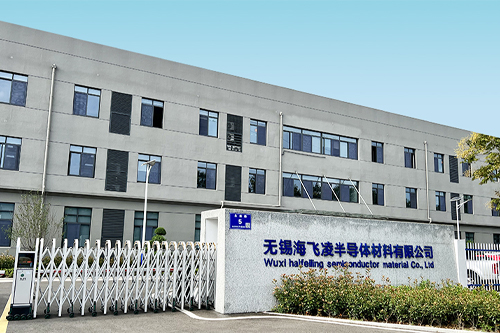
Haifeiling owns domestic advanced technology, equipment and high-level R D team, and is committed to creating well-known brand trademarks of Haifeiling products












 4008-168-001


 2024-03-19