



Time:2023.03.22Browse:1
1. Heating and conductive: The heterogeneity of graphite is 300 times that of the normal non -non -non -metal mine. Conductivity surpasses non -metal materials such as steel, iron, lead. The conductivity coefficient increased with a decrease in measure, and even at a high degree, graphite became armatologist.
2. Chemical stability: Graphite is excellent chemical stability at normal temperature, and the erosion of acid, alkali resistance and inorganic solvents.
3. Smooth: The smooth function of graphite originated from the size of the graphite scales. The larger the scales, the smaller the conflict coefficient, and the better the smooth function.
4. Plasticity: The graphite is tough and can be crushed into a thin crack.
5. Taxation shock: Graphite can be banned violently at the time of normal temperature and can be banned violently without destruction. When the measurement gradually changes, the volume of the graphite is not large and no cracks will occur.
6. Low temperature resistance: The melting point of graphite is 3850 ± 50 ° C, and the boiling point is 4250 ° C. Even after the ultra -low temperature arc burns, the weight loss is small, and the thermal contraction coefficient is also small. Graphite strength has increased with progress. At 2000 ° C, graphite strength has doubled.
 2023-03-20
The size of a material particle determines its proper name. As you asked, micro-powder is a micron-sized powder. In the graphite industry, micro-powder generally refers to a particle with a median diameter of 10~45 microns, and ultra-micro-powder to a particle with a median diameter of less than 5 microns.
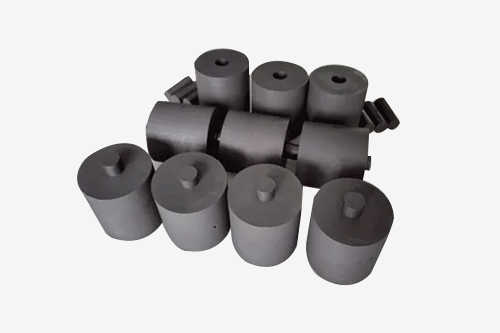
1. Broken: Graphite mold directly contacts the matrix powder containing diamond. The contact surface is in a high pressure state. The hardness of diamond and graphite mold is too poor. The surface of the mold that is in contact with diamond tool head will produce concave pits.Second, the type of damage: During the sintering process, the matrix powder infiltrates into the oxidation gap of the graphite mold under the melting state, resulting in the adhesion between the tool head and the mold, making it difficult for molding. The repeated attack of the mold can remove the mold, which causes the lack of edges and metal pit in the mold.Third, the wear size of graphite molds is very poor: some substrate powder will be squeezed out of the mold surface in the melting state to attach to the graphite material. Before using the mold next time, metal residues must be removed manually, which causes the shape and size of the mold to exceed the tolerance.Fourth, surface oxidation and cracking: Becau2023-03-22Several factors of hot pressure graphite mold damage

Haifeiling owns domestic advanced technology, equipment and high-level R D team, and is committed to creating well-known brand trademarks of Haifeiling products












 4008-168-001