



Time:2023.08.28Browse:1
The factors that affect the impregnation effect include: firstly, the impregnation process conditions (such as temperature and pressure), and secondly, the physicochemical properties of the impregnation.
Influence of process conditions
(1) Temperature (product preheating temperature, impregnation tank temperature, impregnation agent temperature), depending on the impregnation process: 1. The product is preheated too high and is prone to oxidation; The temperature is too low, and when it comes out of the preheating box, it quickly cools down and enters the impregnation tank. When the impregnating agent encounters cold products, its viscosity increases and its fluidity deteriorates, resulting in poor impregnation effect. 2. If the tank temperature is too high, asphalt is prone to oxidation condensation reaction, viscosity will also increase, and flowability will deteriorate; The tank temperature is too low, the fluidity of asphalt is also poor, and the impregnation effect is not ideal.
(2) Pressure (vacuum degree of the impregnation tank, pressure and time of pressurization)
The influence of the physicochemical properties of impregnating agents
(1) The higher the density of the impregnating agent, the higher the coke residue rate and the better the impregnation effect.
(2) It is better to have an appropriate viscosity. The smaller the viscosity of the impregnating agent, the better its fluidity, and it is easier to penetrate into smaller pores. However, if the viscosity is too small, the amount of coke formation will inevitably decrease.
(3) The higher the surface tension of the impregnating agent liquid, the better. The higher the surface tension, the smaller the wetting contact angle on the surface of the product, resulting in a higher capillary osmotic pressure and better wetting of the product, resulting in a better impregnation effect.
(4) The smaller and more spherical the suspended solids in the impregnating agent, the better. If the penetration force of spherical fine particles is strong, the impregnation effect is better.
 2023-03-27
Today, the editor of Qingdao Risheng Graphite will tell you what the ultra -fine graphite powder has in industrial production, I hope to help everyone.
Graphene already exists in nature, but it is difficult to peel off a single layer structure. Graphene is stacked layer by layer to form graphite, with a thickness of 1 millimeter containing approximately 3 million layers of graphene. A pencil lightly scratches on paper, leaving traces that may be several or even just one layer of graphene.
The crushing of graphite blocks can be divided into three items, do you know? Let's take a look at it together!1. Pre -fragmentation (or crushing): This also refers to the crushing of block -shaped graphite block raw materials after entering the factory. Generally, it refers to crushing the block of the block of 200mm to 50 ~ 70mm. EssenceSecond, medium crushing: This also refers to the granularity of graphite block raw materials after forging to the particle size necessary for the seasoning. Generally, the block degree of up and down 50mm after the forging is crushed to 1 ~ 20mm.Third, fine grinding (or grinding): It is grinding part of the raw material of graphite blocks to 0.15mm or 0.075mm particle size below. Every time it goes through, the granularity of the raw materials has become smaller. The larger diameter of the large raw material before crushing is the ratio of the diameter of the larger block of the raw material after crushing, which is called a crushing ratio.2023-04-20Electronic effect of graphene
2023-02-22What kind of crushing of graphite blocks can be divided into?
2023-12-12Raw material cost: The price of graphite molds is influenced by the cost of raw materials. The main raw material for graphite molds is graphite material, and its price fluctuations will directly affect the price of graphite molds. The rise or fall in raw material prices can lead to fluctuations in graphite mold prices.
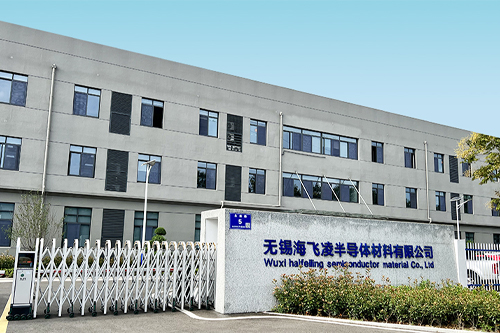
Haifeiling owns domestic advanced technology, equipment and high-level R D team,
and is committed to creating well-known brand trademarks of Haifeiling products



Application Area
Technology Center
Contact Us











 4008-168-001