



Time:2023.04.25Browse:1
Graphene already exists in nature, but it is difficult to peel off a single layer structure. Graphene is stacked layer by layer to form graphite, with a thickness of 1 millimeter containing approximately 3 million layers of graphene. A pencil lightly scratches on paper, leaving traces that may be several or even just one layer of graphene.
The carrier mobility of graphene at room temperature is about 15000 cm2/(V · s), which is 10 times more than that of silicon materials, and more than twice that of indium antimonide (InSb), the material with the highest known carrier mobility. Under certain conditions, such as low temperature, the carrier mobility of graphene can even reach 250000 cm2/(V · s). Unlike many materials, the electron mobility of graphene is less affected by temperature changes. At any temperature between 50 and 500K, the electron mobility of single-layer graphene is about 15000 cm2/(V · s).
In addition, the half integer quantum Hall effect of electron carriers and hole carriers in graphene can be observed by changing the chemical potential through the action of electric field. Scientists have observed this quantum Hall effect of graphene at room temperature. The carriers in graphene follow a special quantum tunnel effect, and will not produce backscattering when they encounter impurities, This is the reason for the local super conductivity and high carrier mobility of graphene. The electrons and photons in graphene have no stationary mass, and their velocity is a constant independent of kinetic energy.
Graphene is a zero distance semiconductor because its conduction and valence band meet at the Dirac point. Brillouin at the edge of the momentum space at six positions of the Dirac point is divided into two groups of equivalent triplets. In contrast, the main points of traditional semiconductors are generally Γ, The momentum is zero.
 2023-04-03
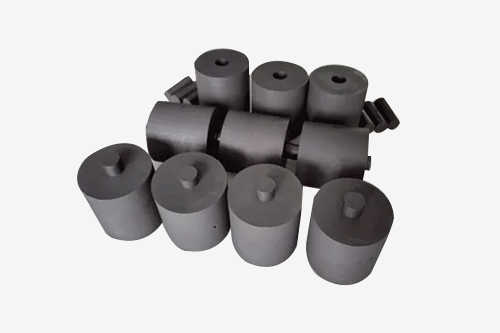
Graphite is widely used in industrial departments such as the metallurgical industry, forging, machinery and equipment, chemical factories, and other industrial departments. Below, Kobwei's graphite product manufacturer told everyone that the application of graphite products for graphite products.
(1) Select the appropriate electrode variety and diameter based on the capacity of the electric furnace and the equipped transformer capacity.(2) During the loading, unloading, and storage of graphite electrodes, attention should be paid to preventing damage and moisture. The electrodes that are affected by moisture should be dried by the electric furnace before use. When lifting, the joint holes and surface threads of the electrodes should be protected.(3) When connecting the electrode, compressed air should be used to blow off the dust in the connector hole. The force used to screw the connector into the electrode connector hole should be stable and uniform, and the tightening torque should comply with regulations. When holding the electrode, it is necessary to avoid the joint area, that is, clamp it above or below the bottom of the electrode joint hole.(4) When loading furnace materials into the electric furnace, in order to reduce the impact of furnace material collapse on the ele2023-08-29What precautions should be taken when using graphite electrodes in electric furnace steel mills?

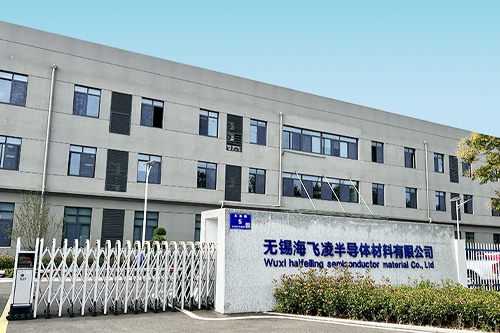
Haifeiling owns domestic advanced technology, equipment and high-level R D team, and is committed to creating well-known brand trademarks of Haifeiling products













 4008-168-001